Request a Quote

0-10V LED Driver Technology

How 0-10V dimmable constant current LED drivers use a simple analogue control signal to dim LED luminaires, and how to choose between 0-10V, 1-10V, multi-mode and tuneable white drivers.

0-10V dimmable constant current LED drivers

Overview

What is a 0-10V LED driver?

A 0-10V dimmable LED driver is a constant current LED power supply with an analogue dimming input. A low-voltage DC control signal, carried on a separate pair of wires, sets the light output: 10V gives full brightness, and lowering the voltage dims the LEDs smoothly down to their minimum level or off. It is one of the simplest and most widely used ways to dim commercial LED luminaires.

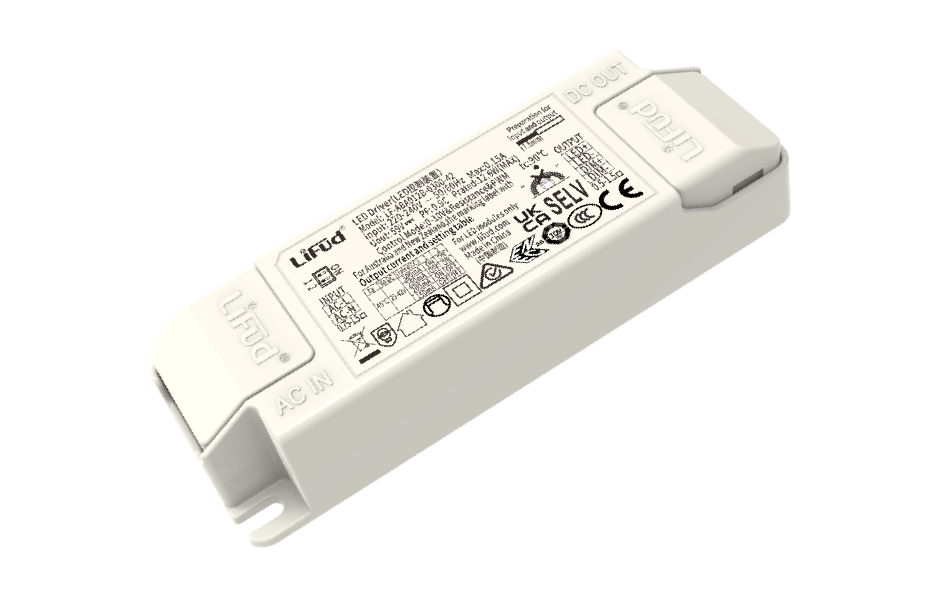
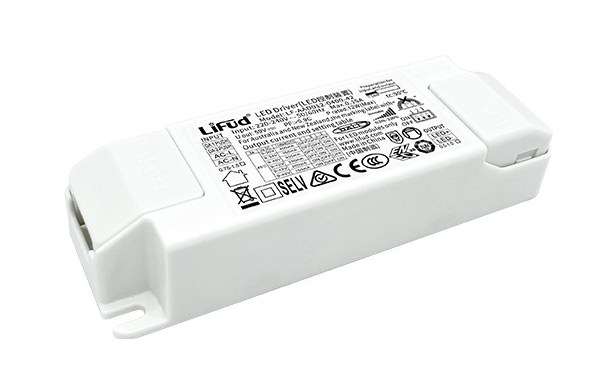
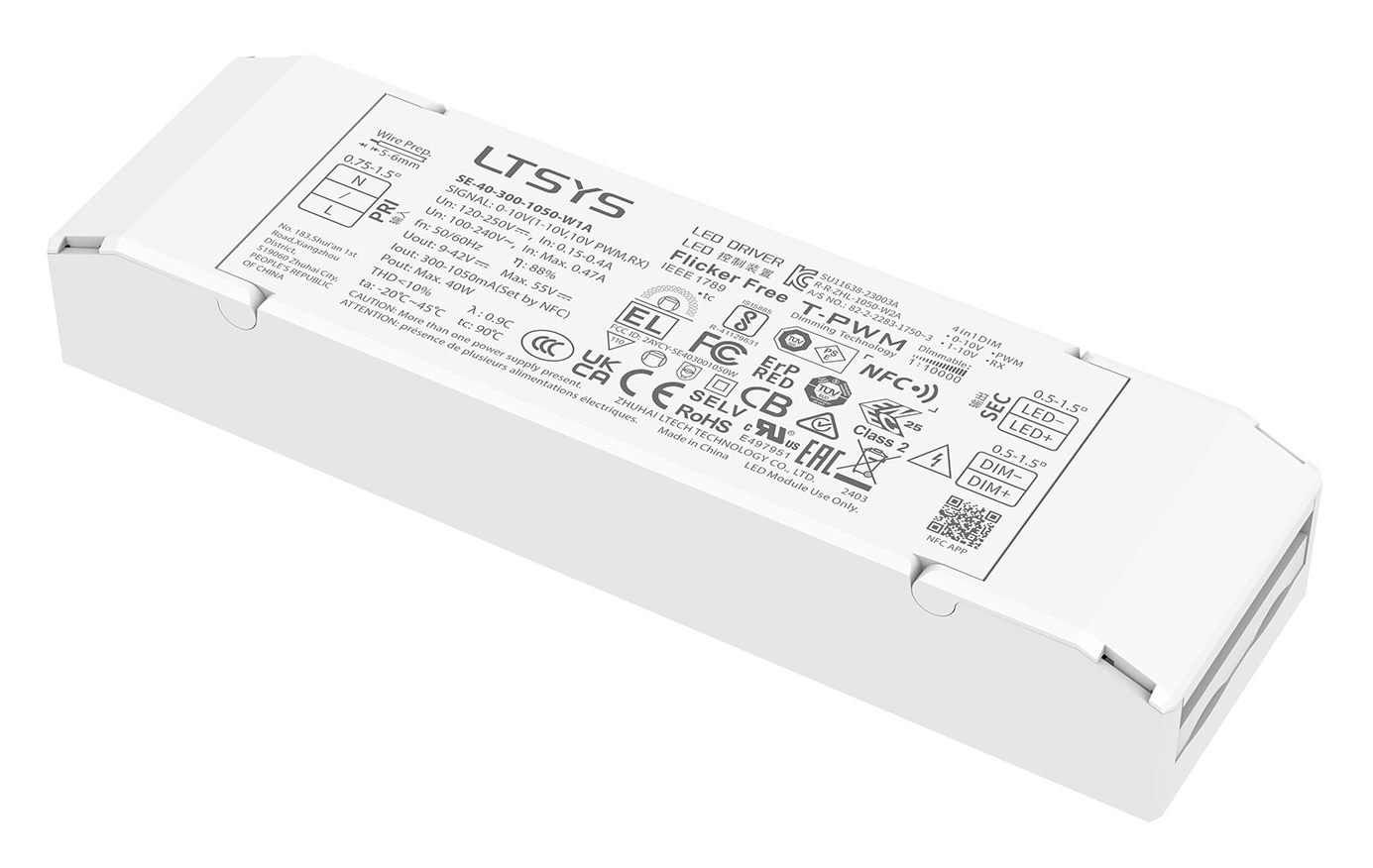
Our 0-10V CC range from Lifud and LTECH, plus the SRP-2007 50W driver, covers 8W to 50W, with output currents from 100mA to 1500mA set by DIP switch or NFC programming. Multi-mode drivers also accept PWM and variable resistor (Rx) signals, and LTECH's dual-channel models add 0-10V tuneable white control.

  • Simple analogue dimming from a wall controller, sensor or BMS
  • Smooth, flicker-free dimming to 1% (0.01% on LTECH T-PWM models)
  • 0-10V, 1-10V, PWM and Rx inputs on multi-mode drivers
  • Output current set by DIP switch or NFC
  • Tuneable white dual-channel options

0-10V CC range at a glance

  • Brands: Lifud, LTECH
  • Power: 8W – 50W
  • Output current: 100mA – 1500mA
  • Output voltage: Up to 48VDC
  • Input: 100-240VAC / 220-240VAC
  • Dimming: 0-10V, 1-10V, PWM, Rx
  • Current setting: DIP switch or NFC
  • Colour: Single colour or tuneable white
Request a Quote Technical Enquiry

The technology

How 0-10V dimming works

Each driver is connected to mains power and, separately, to a two-wire control pair marked DIM+ and DIM-. The driver's dimming input supplies a small current, and the controller sinks it to pull the control voltage down between 10V and 0V.

The driver reads that voltage and reduces its constant current output in proportion: around 10V gives 100% output, and the light dims as the voltage falls. On dim-to-off models the LEDs switch off at about 0.5V; on 1-10V models the light holds at minimum below 1V.

Because the signal is analogue, every driver on the same control pair dims together. Different zones need their own control channels.

A 0-10V controller wired in parallel to two constant current LED drivers, with a graph of output current rising as the control voltage rises from 0 to 10 volts One control pair dims every driver together 0-10V controller set to 6V Mains DIM+ / DIM- (6V) 0-10V CC driver 60% output 0-10V CC driver 60% output 100% Off 0V 5V 10V Control voltage sets output current Dim-to-off below 0.5V
Simplified illustration: mains (red, dashed) powers each driver, while the 0-10V control pair (teal) sets the same dimming level on every driver connected to it.

Control signals

0-10V, 1-10V, PWM and Rx compared

Multi-mode drivers accept several analogue signals on the same DIM terminals, so one driver can suit different controllers.

SignalHow it worksLow endTypical controller
0-10VDC control voltage from 0V to 10V sets the output levelDim-to-off at about 0.5VWall dimmers, sensors, BMS outputs
1-10VDC control voltage from 1V to 10V sets the output levelHolds at minimum below 1V; switch off at the mainsWall dimmers with a mains switch
10V PWM10V pulse signal; the duty cycle sets the output levelDim-to-off at a few % dutyPWM controllers and lighting modules
RxVariable resistor across DIM+ and DIM-, typically 0-100kΩDim-to-off at low resistanceSimple potentiometer, no power needed
Fixed resistor (Rx)A fixed resistor across DIM+ and DIM- holds the output at a set current below the rated valueNot used for dimming; sets a fixed levelNo controller: sets the CC value in the luminaire

Our range

0-10V CC drivers compared

Choose the power and current to suit the LEDs, then the dimming inputs and current setting method you need.

SeriesPowerOutput currentCurrent settingDimming
Lifud LF-AAA8 – 40W100 – 1050mADIP switch0-10V
Lifud LF-ABA12 – 40WUp to 1050mADIP switch0-10V / PWM / Rx, 12V AUX
LTECH SE-W1A10W, 20WFrom 100mANFC0-10V
LTECH SE-W1A-DIP10 – 40WFrom 350mADIP switch0-10V
LTECH SE-W2A-NFC30W, 40W200 – 1050mANFC, 1mA steps0-10V / 1-10V / PWM / Rx, tuneable white
SRP-200750W250 – 1500mADIP switch0-10V / 1-10V

Benefits

Advantages of 0-10V LED drivers

Why 0-10V remains a popular choice for dimming commercial LED lighting.

Simple to install

Just two low-voltage control wires alongside the mains, with no addressing or commissioning.

Smooth dimming

Flicker-free dimming to 1%, or down to 0.01% with LTECH T-PWM technology.

Wide compatibility

Works with wall dimmers, occupancy and daylight sensors, and building management systems.

Cost effective

An economical way to add dimming where individual addressing is not needed.

Tuneable white

Dual-channel drivers use a second 0-10V input to set colour temperature as well as brightness.

Flexible set-up

Set the output current by DIP switch, or by NFC from a phone app without powering the driver.

Selection & set-up

Choosing and installing a 0-10V driver

  • Match the current: set the output current by DIP switch or NFC to the LED module's rated current.
  • Fine-tune with a fixed resistor: on Rx-capable drivers, a fixed resistor across DIM+ and DIM- sets the output current below the DIP switch value. Choose its value from the driver's Rx dimming curve.
  • Check the voltage window: the LED forward voltage must sit within the driver's output voltage range.
  • Choose the signal: 0-10V dim-to-off, 1-10V, or a multi-mode driver to suit the controller.
  • Size the controller: check how many drivers it can sink current for on one control pair.
  • Wire the control pair: DIM+ to DIM+ and DIM- to DIM-, kept separate from the mains wiring as the instructions require.
  • Zone the lighting: use a separate control channel for each group that needs its own level.

Related technology and products

Compare other dimming methods and driver types:

Ask an Engineer
0–10V
Analogue control signal
1%
Typical dimming depth
8–50W
Power range
1.5A
Maximum output current

Where 0-10V drivers are used

0-10V suits any space that needs reliable, straightforward dimming by zone.

Offices

Panels and downlights dimmed by zone, sensor or BMS.

Retail

Track and downlights set to suit displays and opening hours.

Education

Classroom dimming from simple wall controls.

Hospitality

Restaurant, bar and hotel lighting with smooth low-level dimming.

Warehouses

High-output luminaires dimmed by occupancy sensors to save energy.

Residential

Kitchen and living-space downlights on rotary or slide dimmers.

Explore

Explore dimmable LED drivers

Browse our 0-10V drivers and other dimming options.

FAQ

0-10V driver questions

0-10V is an analogue lighting control method. A low-voltage DC signal between 0 and 10 volts, carried on a separate pair of control wires, sets the light output of the driver: 10V gives full brightness and lower voltages dim the LEDs, down to minimum or off.

With 1-10V, the driver dims to its minimum level at 1V and below, and the light is switched off by breaking the mains supply. With 0-10V dim-to-off drivers, the light turns off when the control signal falls to around 0.5V or below, so no separate switching is needed. Many modern drivers recognise both signals automatically.

Several drivers can be wired in parallel on the same control pair, and they all dim together. The number depends on how much current the controller can sink compared with the current each driver's dimming input supplies, so check both datasheets. 0-10V is not addressable, so drivers that need different levels need separate control channels.

Yes. The control pair is marked DIM+ and DIM-, and must be connected to the matching terminals on the controller. If the DIM input is left unconnected, most drivers run at 100% output. Always follow the driver and controller instructions and local wiring regulations.

Depending on the model, the output current is set by DIP switches or by NFC programming with a phone app. On drivers with an Rx input, a fixed resistor across DIM+ and DIM- can also hold the output at a set current below the rated value, chosen from the driver's Rx dimming curve. Set it to match the LED module's rated current before connecting the LEDs, and check that the LED forward voltage sits within the driver's output voltage range.

Need help choosing a 0-10V driver?

Our team can help you match the driver current, dimming signal and controller to your luminaire.

Talk to Our Engineers