Request a Quote

LED Neon Flex Technology

How LED neon flex recreates the look of glass neon with a safe, low-voltage, flexible silicone light source, and how to choose between side view and top view versions.

White LED neon flex

Overview

What is LED neon flex?

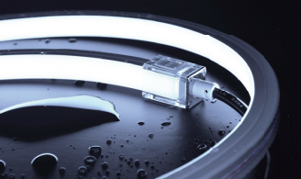
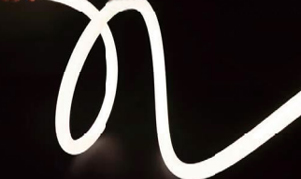
LED neon flex, also called LED neon strip, is a flexible LED strip fully encapsulated in a solid, light-diffusing silicone profile. The LEDs sit at the base of the profile and the silicone spreads their light into a smooth, continuous, dot-free line, recreating the look of traditional glass neon without the glass, gas or high voltage.

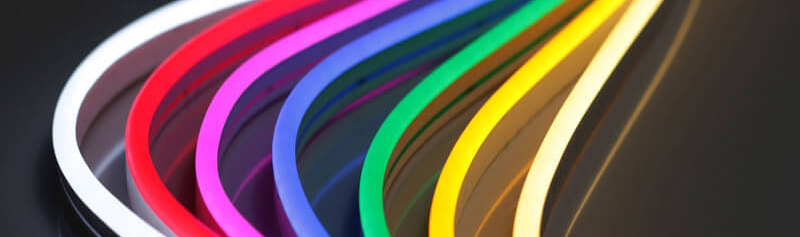
Because it is flexible, it can be bent by hand into curves, outlines and lettering on site, and cut to length at marked points. Our white neon flex range runs at 24VDC using 2835 LEDs, in profiles from 4x8mm to 16x15mm, with seven colour temperature options between 2000K and 6500K, a 120° to 180° beam angle and IP67 protection. It is available in side view and top view versions, with 360°, multicolour and pixel-addressable options in the wider range.

  • Smooth, continuous, dot-free line of light
  • Safe 24VDC operation with no high-voltage transformers
  • Bends by hand and cuts to length on site
  • UV-stable silicone for indoor and outdoor use, rated IP67
  • Side view and top view bending to suit the shape of the design
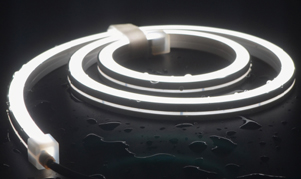
White neon flex at a glance

  • Construction: Side view & top view
  • Profile sizes: 4x8mm – 16x15mm
  • Voltage: 24VDC
  • LED type: 2835
  • CCT: 2000K – 6500K (7 options)
  • Power: 5W/m – 15W/m
  • Beam angle: 120° – 180°
  • Cut intervals: 25mm or 50mm
  • IP rating: IP67
Request a Quote Technical Enquiry

The technology

Side view and top view explained

Inside every neon flex profile is a narrow LED strip. The direction the strip faces decides which face of the profile lights up, and which way the profile can bend.

In side view neon flex the LED strip stands on its edge, so light leaves through the narrow side of the profile. The profile bends horizontally, flat against the mounting surface, making it ideal for outlines, wall graphics and curved signage.

In top view neon flex the LED strip lies flat, so light leaves through the top face. The profile bends vertically, up and down, making it ideal for channels, coves, contours and lines that follow a rising or falling surface.

Cross-sections of side view and top view LED neon flex showing light direction and bending direction Side view Light from the narrow side Strip on edge Bends horizontally (flat curves) Top view Light from the top face Strip lying flat Bends vertically (up and down)
Simplified cross-sections: silicone profile (grey), diffusing window (cream), LED strip (navy) and LED (gold). Arrows show the bending direction.

Side view vs top view

Choosing the right construction

Pick the construction that bends in the same direction as your design. Our white ranges compared:

CharacteristicSide view (PNS series)Top view (PNT series)
Light-emitting faceNarrow side of the profileTop face of the profile
Bending directionHorizontal, flat against the surfaceVertical, up and down
Profile sizes4x8, 6x12 and 10x10mm6x6, 10x10, 12x12 and 16x15mm
Power5, 6 or 10W/m5, 6, 10 or 15W/m
Cut intervals50mm25mm
Colour optionsWhite, 2000K–6500KWhite, 2000K–6500K; RGB and RGBW on 16x15mm
Best forOutlines, wall graphics, logos and curved signageCoves, channels, contours, stair and step edges
CharacteristicGlass neonLED neon flex
Operating voltageSeveral thousand volts via transformer24VDC
Power consumptionHighLow, from 5W/m
DurabilityFragile glass tubeImpact-resistant silicone
ShapingSpecialist glass bendingBent by hand on site
Cutting to lengthNot possibleAt marked cut points
ContentsNeon or argon gas, sometimes mercuryNo gas or mercury
Weather resistanceRequires protectionIP67 silicone

LED vs glass

Why LED neon flex replaces glass neon

LED neon flex delivers the same bold, continuous line of light that made glass neon popular, but runs at a safe low voltage, uses a fraction of the energy and will not shatter.

It can be cut, bent and installed by a lighting installer rather than a specialist glass bender, and colours or colour temperatures can be changed simply by choosing a different product.

Ask an Engineer

Benefits

Advantages of LED neon flex

Why neon flex is the go-to choice for signage and architectural line lighting.

Dot-free line of light

The diffusing silicone spreads the light evenly, so the line looks continuous even when viewed directly.

Safe low voltage

24VDC operation removes the need for high-voltage transformers, making it safer to install and maintain.

Flexible on site

Bend by hand to follow curves and shapes, and cut to length at marked points every 25mm or 50mm.

Indoor and outdoor

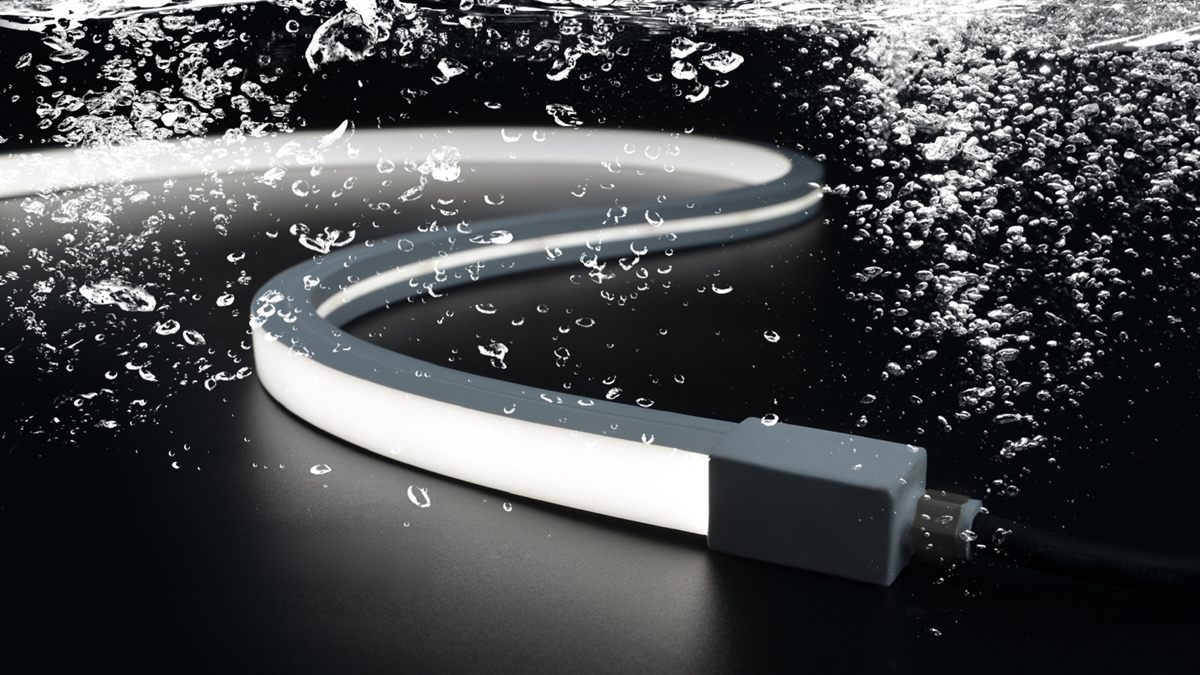
Solid, UV-stable silicone construction rated IP67 resists dust, rain and temporary immersion.

Energy efficient

Efficient 2835 LEDs at 5W to 15W per metre give bright output with low running costs and little heat.

Wide colour choice

Seven white colour temperatures from 2000K to 6500K, plus multicolour, RGBW and pixel-addressable versions.

Installation

Installing neon flex

  • Mount with clips or aluminium channel. Clips suit curves; channels keep straight runs neat and help spread heat.
  • Cut only at the marked cut points, then seal the end with an end cap or fit a feed connector.
  • Seal every cut end and joint with the matching cap or connector to maintain the IP67 rating outdoors.
  • Respect the bend direction: side view bends flat, top view bends up and down. Avoid tight kinks or twisting.
  • Size the power supply for the total wattage plus a safety margin, and use 24VDC drivers rated for the location.
  • Use IP68 products where the light will be continuously submerged; IP67 covers splashing and temporary immersion.

Complete the installation

We supply the drivers, controllers and connectors to finish your neon flex project.

Talk to Our Team
24VDC
Safe low voltage
IP67
Silicone protection
25mm
Shortest cut interval
7
White colour temperatures

Where neon flex excels

LED neon flex is used wherever a bold, continuous line of light is part of the design.

Signage & logos

Lettering, logos and shop signs with the look of classic neon.

Façades & outlines

Building contours, roof lines and window outlines indoors and out.

Coves & interiors

Ceiling coves, recesses and feature lines in hotels, bars and homes.

Steps & handrails

Stair nosings, step edges and handrails for guidance and safety.

Landscape

Paths, planters, benches and pool surrounds above the waterline.

Retail & events

Displays, bars, stages and exhibition stands with eye-catching lines.

Our range

Explore LED neon flex

Browse our full range of neon flex.

FAQ

LED neon flex questions

Side view neon flex emits light from its narrow side and bends horizontally, so it follows curves laid flat on a surface, such as outlines and wall graphics. Top view neon flex emits light from its top face and bends vertically, so it suits channels, coves and lines that rise and fall, such as stair nosings and contours.

LED neon flex gives a similar continuous line of light but runs at a safe low voltage, uses much less power, has no fragile glass or gas, and can be cut to length and bent on site. Glass neon needs high-voltage transformers and specialist glass bending.

Yes. Neon flex can be cut at the marked cut points, every 25mm or 50mm depending on the model in our white range. The cut end is then sealed with an end cap or fitted with a feed connector to maintain the IP rating.

Our white neon flex is rated IP67, which protects against dust, rain, splashing and temporary immersion, making it suitable for most outdoor and wet locations when correctly sealed. For continuous immersion, such as underwater, an IP68 product is needed.

Neon flex is usually fixed with mounting clips or pressed into aluminium channels, which hold the profile straight, help with heat dissipation and give a neat finish. Matching end caps and feed connectors seal each run.

Need help with a neon flex project?

Our team can help you choose side view or top view, the right size and colour temperature, and the drivers and fixings to complete your installation.

Talk to Our Engineers